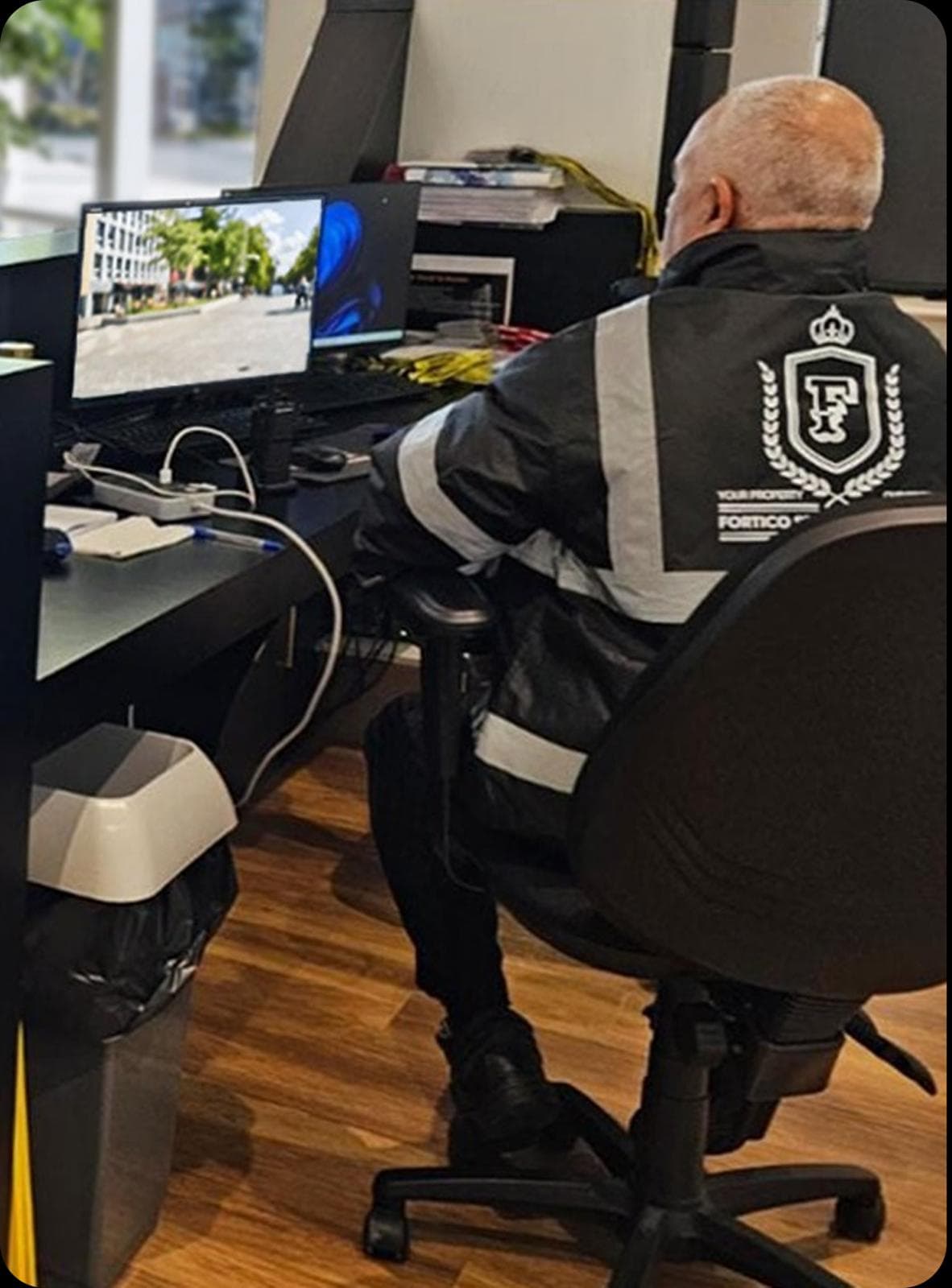
Manned guarding, also known as static guarding or manned security, means a licensed officer is based at one site for a full shift. A patrol calls in and moves on. A static guard stays from start to finish.
A normal shift mixes fixed posts with movement. The officer runs the gate or front desk, signs in visitors and deliveries, walks internal and perimeter routes at set times, and locks or unlocks areas to your timetable. If something goes wrong, they follow your procedures and alert our control room at once.
All of this is agreed in writing before day one, in a document the industry calls assignment instructions. It is the rulebook for your site: patrol routes and times, who may go where and who to ring for each type of incident. We draft it with you and revise it when the site changes. Relief officers covering holidays or sickness work from the same instructions, so the standard holds when your regular guard is off.
Licensing follows the duties. An SIA security guard licence covers most static guarding work, but using cameras to monitor people for disorder or assault also needs an SIA public space surveillance (CCTV) licence. We check each officer holds the right licence for your instructions before deployment.
Some sites do not need a person there all shift. When the building is empty and the risk sits mainly out of hours, mobile patrols can cover it for less, and empty premises often suit vacant property security. Our guide to manned guarding vs mobile patrols explains where each one fits, and plenty of sites use both.